Community Through
Platform Expansion

+15% user retention

First-mover advantage

Outdoor guide marketplace
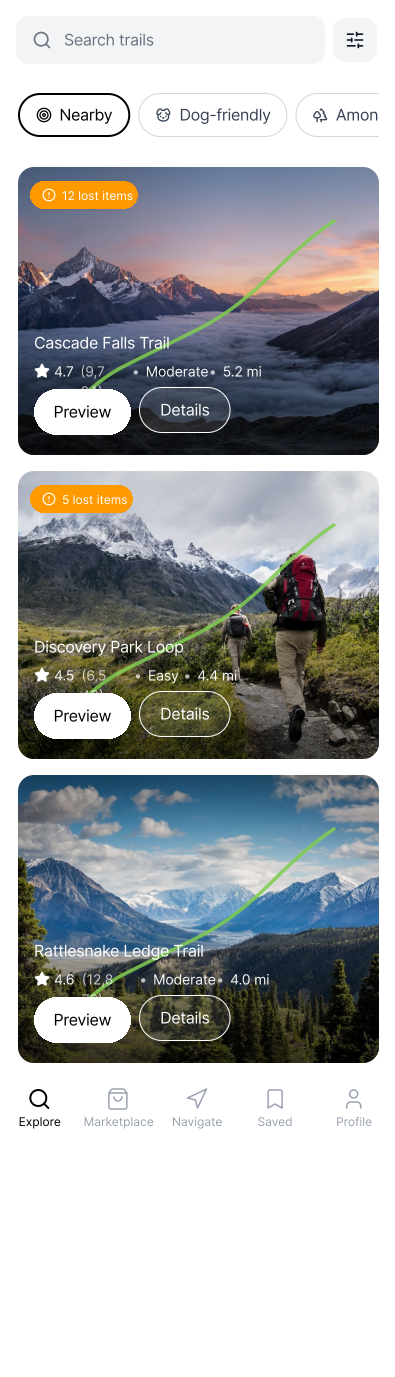
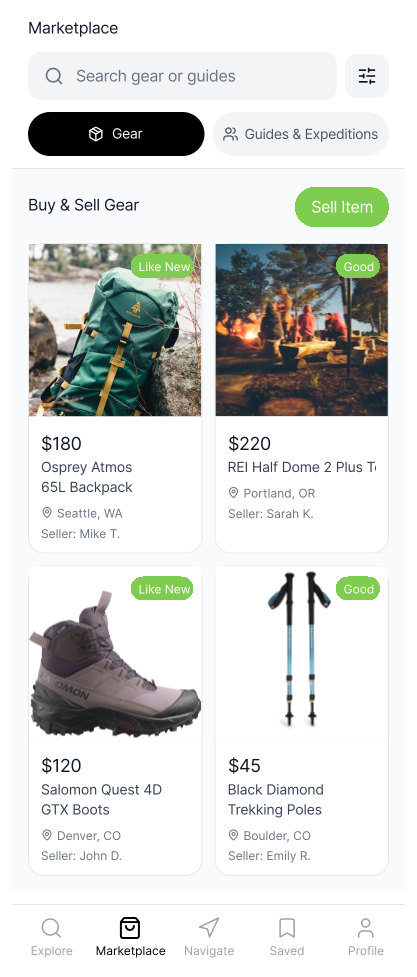

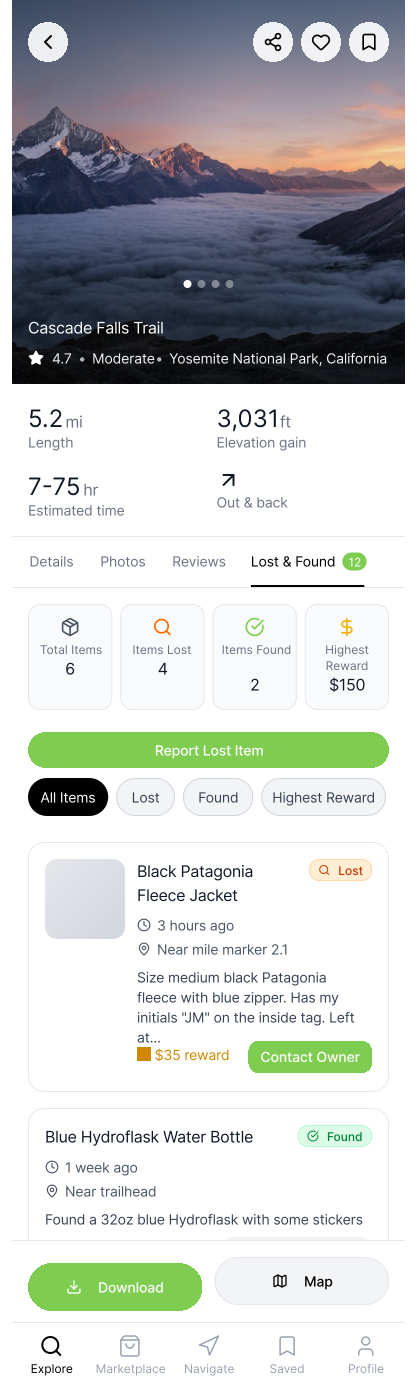
REI shut down their $50M+ guided experiences program (June 2024), leaving 500+ certified guides without a platform and thousands of customers without trusted access to outdoor education.
Western US wildfires increased 400% since 1970. In 2024 alone, 68% of our Western users canceled trips due to air quality—but our app showed "perfect weather" because we didn't surface AQI data.
Google Maps added hiking trails (March 2024), Strava launched route discovery (July 2024). Our differentiation as "just a trail database" was eroding.
Build what only AllTrails can build—a trust-based platform that leverages our 65M users' intent signals to connect outdoor experiences, not just catalog them.

Help Me Hike Safely in Wildfire Season
"I drove 3 hours to Lake Tahoe only to find the air quality was hazardous. AllTrails showed perfect weather but didn't mention the smoke. I felt betrayed—isn't safety your whole thing?"

Help Me Recover What I Lost (and Help Others)
"Lost my $300 Garmin watch on Angels Landing. Posted on 6 Facebook groups, Reddit, called the park. Nothing. I'd pay $100 to get it back but there's no system."

Help Me Learn Outdoor Skills Safely
"I want to try backpacking but don't know where to start. REI classes are gone. I'd pay $200 for a trusted first experience."

Air Quality Integration
AirNow API + PurpleAir sensors + NOAA smoke forecasts with color-coded AQI badge on every trail page, push notifications when saved trails exceed AQI 100, and 48-hour forecasts.
KEY DECISION: FREE VS. PREMIUM

AllTrails Marketplace
Lost & Found (10% commission)
Guide Marketplace (15% commission)
KEY DECISION: FREE VS. PREMIUM
Critical Strategic Decisions
Guides: 15%

North Star Metric
Trips Completed Safely
Users who check air quality + complete their planned hike. A canceled trip due to good intel = success. A completed trip in bad air = failure.
12-MONTH BUSINESS IMPACT
+15% user retention
1M+ paid subscribers
67% read comments first
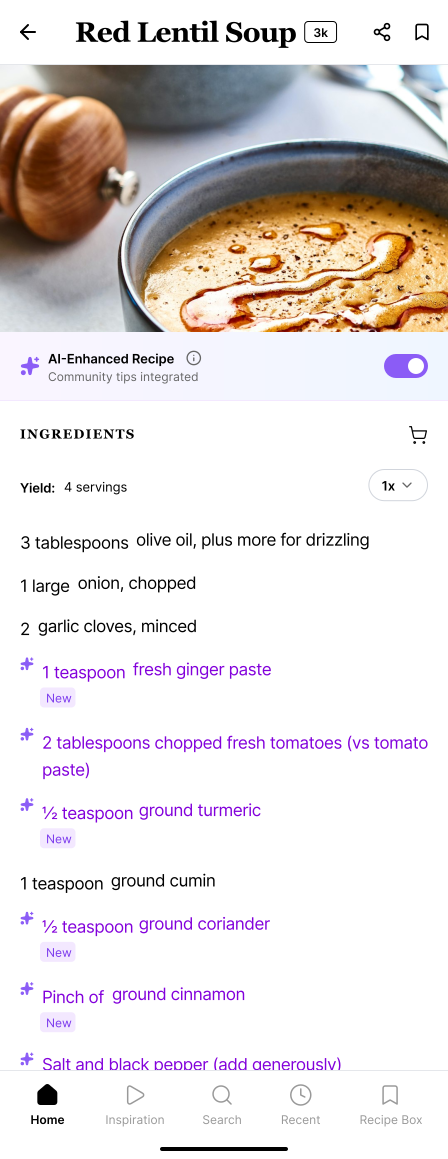
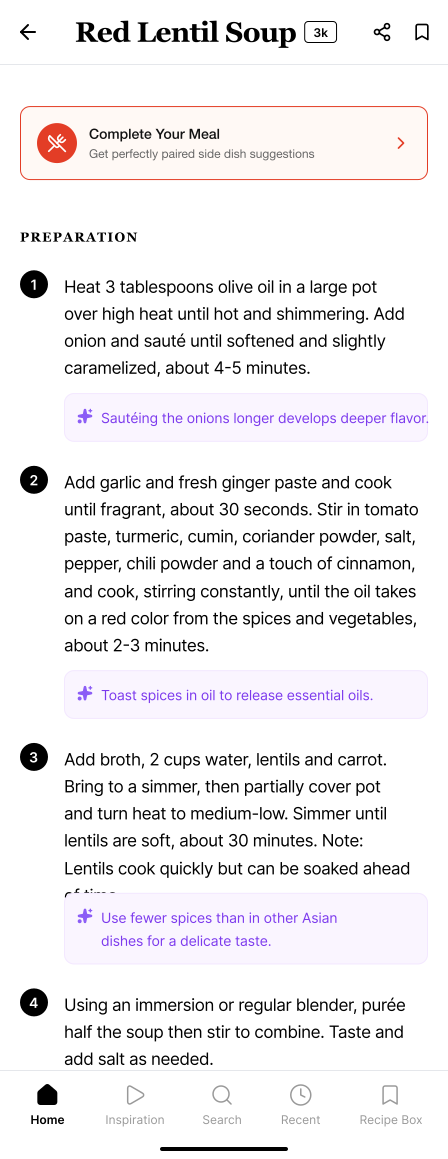
With 1M+ paid subscribers and 456M annual visits, NYT Cooking faced a retention crisis: 40% of subscribers were casual users (1-2 recipes/month) but represented 65% of churn. Users who engaged with 5+ recipes monthly had 3x better retention, revealing a critical engagement gap. Lost LTV: ~$180 per churned user over 3 years.
Despite having 3M newsletter subscribers and rich community engagement, the platform's most valuable asset—community modifications that improve recipes—are buried in comment threads. 67% of users read comments before cooking, and top-voted comments frequently contained the same 3-4 modifications, but users have to manually parse through personal anecdotes and tangential debates.
NYT Cooking operates in a crowded market where free alternatives like Allrecipes exist. Current technical issues (poor search, disorganized recipe box) create friction that drives users to competitors. 54% of users struggle to find simple, everyday solutions. Average session depth: 1.8 recipes vs. competitor benchmarks of 3-4 recipes.
Leverage unique assets—trusted community and editorial curation—to solve confidence and exploration gaps that keep users cooking incomplete meals.
Help Me Cook Recipes Confidently Without Guesswork
"I don't trust my own judgment on modifications. I spend 10-15 minutes reading through all the comments to see what worked for other people, but it's buried in personal stories and debates. I just want to know: should I add more garlic or not?"
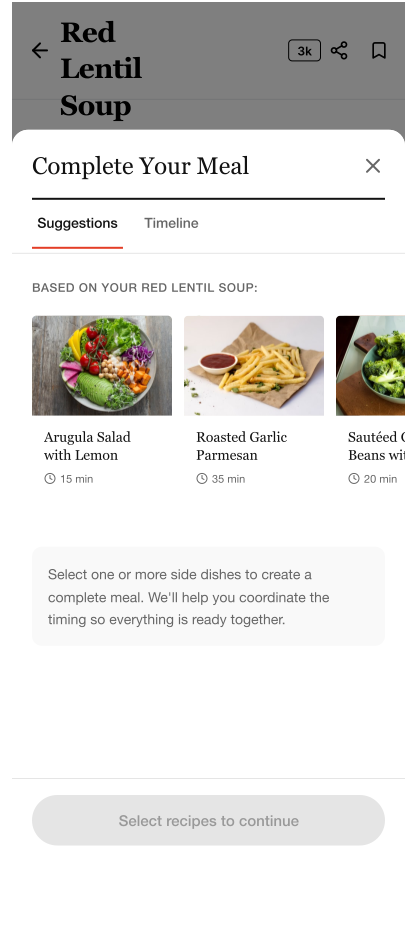
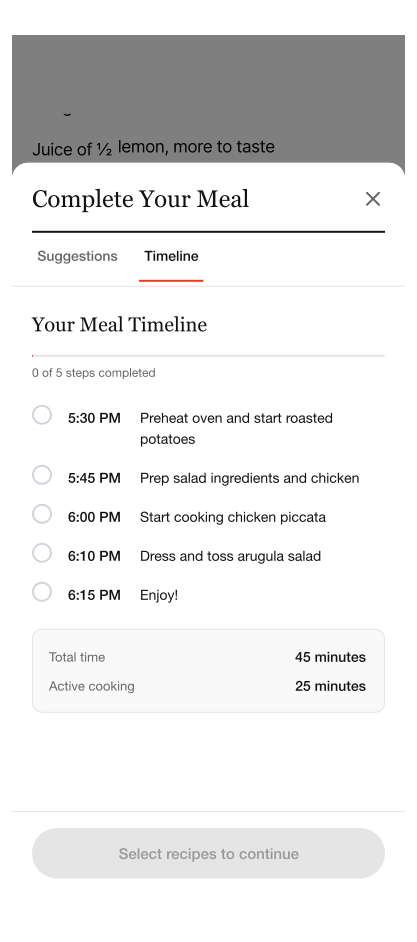
Help Me Plan Complete Meals, Not Just Main Dishes
"I find a great chicken recipe on NYT Cooking, but then I have no idea what to serve with it. Do I just make rice and salad again? I end up browsing Pinterest for 20 minutes or just giving up and making the same default sides."
Help Me Increase Subscriber Retention Through Daily Value
"Our casual users (1-2 recipes/month) represent 40% of our subscriber base but 65% of our churn. Users who engage with 5+ recipes monthly have 3x better retention. We need to transform from 'special occasion cooking' to 'everyday meal planning.'"
Smart Recipe Insights
Surface the most valuable community modifications directly in the recipe interface using NLP analysis + editorial curation. Shows 3-5 most relevant insights (e.g., "87% of cooks who tried this added extra garlic") with one-tap to apply modification.
KEY DECISION: ALGORITHMIC + EDITORIAL VS. PURE ALGORITHM
Meal Companion Recommendations
KEY DECISION: CURATED PAIRINGS VS. AI MEAL PLANNING
In-Recipe Placement Strategy
Community Tips appear as collapsible card directly below ingredient list. Meal Companion module appears below recipe header. Meet users where they are (89% of sessions start with single recipe search), then guide to deeper planning features through progressive disclosure.
KEY DECISION: IN-RECIPE VS. DEDICATED MEAL PLANNING SECTION
Phased Implementation
LEARNING APPROACH: BUILD-MEASURE-LEARN
Critical Strategic Decisions
North Star Metric
Subscriber Retention Rate (90-Day Cohort)
If we increase retention among casual users (1-2 recipes/month) by 15%, we validate that we've transformed NYT Cooking from recipe repository to indispensable cooking companion. Retention is the ultimate measure of delivering ongoing value.