My Impact At

Re

Matter

Background:

THREE INTERCONNECTED CHALLENGES
/01

OPERATIONAL EFFICIENCY

Speed at scale determines competitiveness—truck drivers favor yards with faster processing and will take their business elsewhere. Operators must balance rapid material onboarding (ID verification, fingerprinting, photo capture, accurate grading) with maintaining throughput, all while managing dispatch logistics for commercial pickups.

/02

FINANCIAL MANAGEMENT

Scrap metal prices can fluctuate 10-25% within a single month due to global supply dynamics, currency movements, and geopolitical events. Accurate inventory valuation using Weighted Average Cost (WAC) methodology is critical but challenging when materials are commingled in large piles. Many yards leave significant margin on the table by making pricing decisions without knowing their true material costs.

/03

COMPLIANCE & SECURITY

State-by-state requirements create a complex patchwork governing ID verification, payment methods (cash restrictions, mandatory hold periods of 3-15 days), transaction reporting to law enforcement databases, and enhanced documentation for high-risk materials like catalytic converters and copper. Metal theft—one of the fastest-growing property crimes—creates liability risks for unknowingly purchasing stolen materials, while high cash volumes ($100,000+ weekly for larger yards) create internal shrinkage risks.

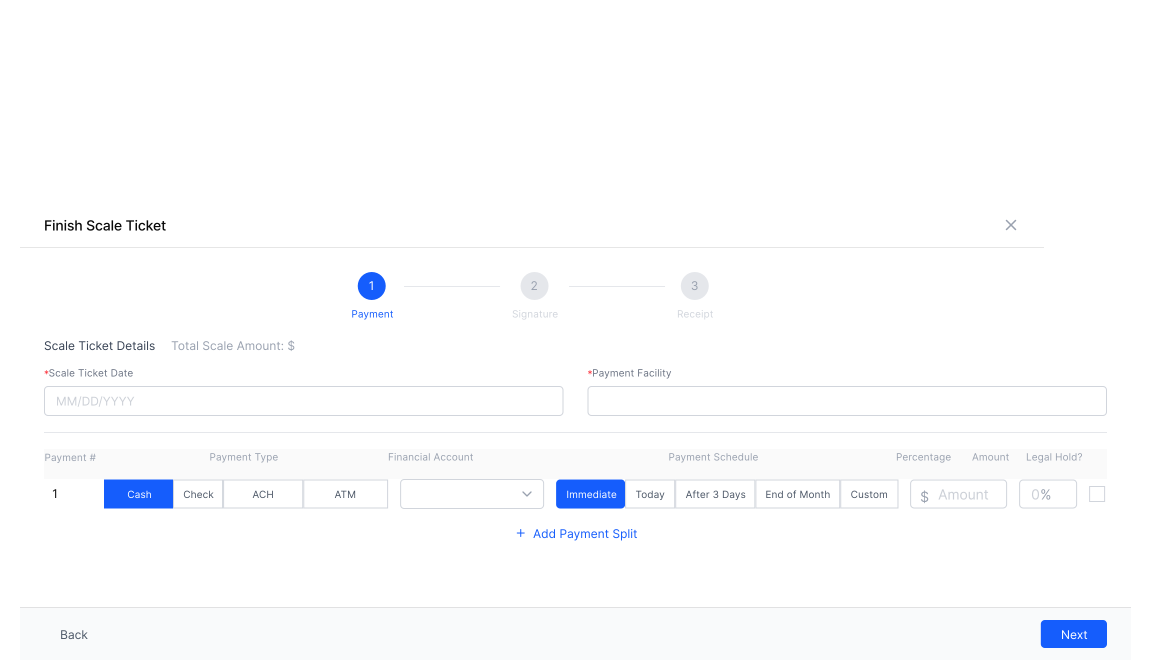
Split Payment System
Multi-tender transactions
THE PROBLEM
Customers often need to split large payouts across multiple payment methods (cash, check, ACH, ATM) due to cash limits, preferences, or regulatory hold periods.
PRODUCT GOAL
Build a flexible payment system that handles complex, multi-method payment splitting required by state regulations and internal business rules, without disrupting the 80% of users who don't need split payments.
IMPACT
Single transaction for complex payments
Automatic hold period tracking per method
Reduced operator errors and training time
Improved customer satisfaction
-40%
TRANSACTION TIME
-85%
OPERATOR ERRORS
+35%
CUSTOMER SATISFACTION
PROBLEM & IMPACT
The Core Problem
Scale operators and cashiers couldn't split payments across methods (cash/check/ACH), time periods, or amounts—forcing them to choose between violating state compliance rules, manual tracking in spreadsheets, or turning away legitimate business.
User Pain Points
Scale operators: Processing 30-50+ transactions daily, stuck making compliance vs. speed tradeoffs
Cashiers: Internal cash handling limits required splitting between cash and check with no system support
Yard managers: Needed to defer partial payment until materials were properly graded
BUSINESS IMPACT
Compliance violations risked $500-10K+ fines and license suspension
Manual tracking caused reconciliation failures
Competitive disadvantage vs. yards with flexible systems
Lost time: 2-3 extra minutes per split payment transaction
KEY DESIGN DECISIONS
Auto-populate remaining balance
TRADEOFF
Prevents math errors, ensures 100% of ticket is always accounted for
RATIONALE
System creates second payment line automatically with remaining balance
$/% toggle with field auto-graying
TRADEOFF
Prevent conflicting inputs, make mode explicit
RATIONALE
Initially considered allowing both with auto-sync, but testing showed confusion
Independent legal holds per split
TRADEOFF
Critical for compliance—different materials have different hold requirements
RATIONALE
More complex UI vs. simpler single-hold approach
Unlimited splits (not preset templates)
TRADEOFF
Every yard had different rules; presets wouldn't cover edge cases
RATIONALE
Slightly higher complexity, mitigated with clear visual running total
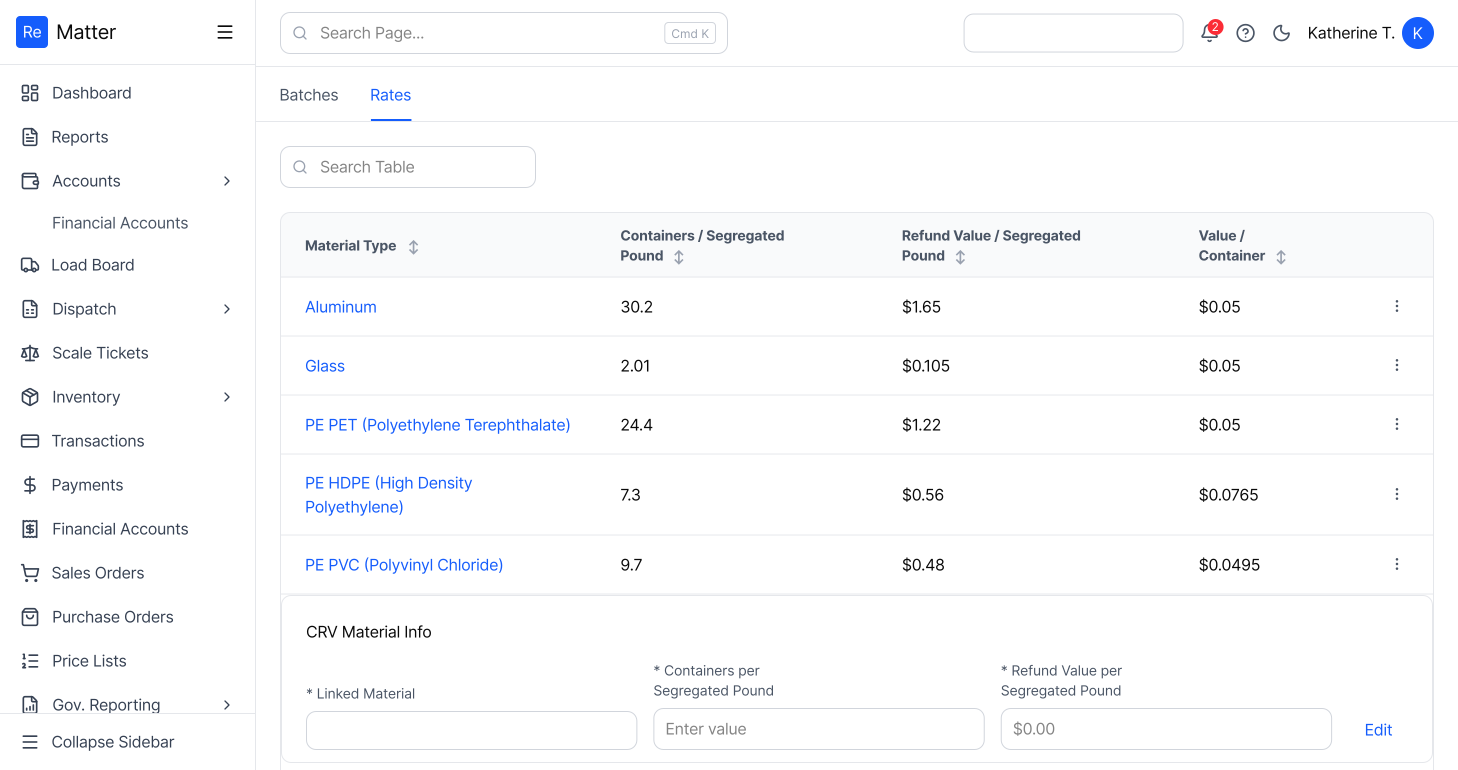
CRV Processing
California Redemption Value
THE PROBLEM
California scrapyards must track CRV-eligible containers separately with specific state-mandated pricing and reporting requirements. Manual tracking led to compliance errors, audits, and lost revenue.
PRODUCT GOAL
Build a flexible payment system that handles complex, multi-method payment splitting required by state regulations and internal business rules, without disrupting the 80% of users who don't need split payments.
IMPACT
Eliminated manual CRV calculation errors
Automated state compliance reporting
Captured 100% of eligible CRV revenue
Reduced processing time by 60%
100%
ERROR REDUCTION
60%
TIME SAVED
-40%
TRANSACTION TIME
PROBLEM & IMPACT
The Core Problem
Scale operators and cashiers couldn't split payments across methods (cash/check/ACH), time periods, or amounts—forcing them to choose between violating state compliance rules, manual tracking in spreadsheets, or turning away legitimate business.
User Pain Points
Scale operators: Processing 30-50+ transactions daily, stuck making compliance vs. speed tradeoffs
Cashiers: Internal cash handling limits required splitting between cash and check with no system support
Yard managers: Needed to defer partial payment until materials were properly graded
BUSINESS IMPACT
Compliance violations risked $500-10K+ fines and license suspension
Manual tracking caused reconciliation failures
Competitive disadvantage vs. yards with flexible systems
Lost time: 2-3 extra minutes per split payment transaction
KEY DESIGN DECISIONS
Show 1 payment line by default
TRADEOFF
Required smart conditional UI (auto-add second line when first payment < 100%)
RATIONALE
40% of users never need splits—don't disrupt their workflow
Auto-populate remaining balance
TRADEOFF
Prevents math errors, ensures 100% of ticket is always accounted for
RATIONALE
System creates second payment line automatically with remaining balance
$/% toggle with field auto-graying
TRADEOFF
Prevent conflicting inputs, make mode explicit
RATIONALE
Initially considered allowing both with auto-sync, but testing showed confusion
Independent legal holds per split
TRADEOFF
Critical for compliance—different materials have different hold requirements
RATIONALE
More complex UI vs. simpler single-hold approach
Unlimited splits (not preset templates)
TRADEOFF
Every yard had different rules; presets wouldn't cover edge cases
RATIONALE
Slightly higher complexity, mitigated with clear visual running total
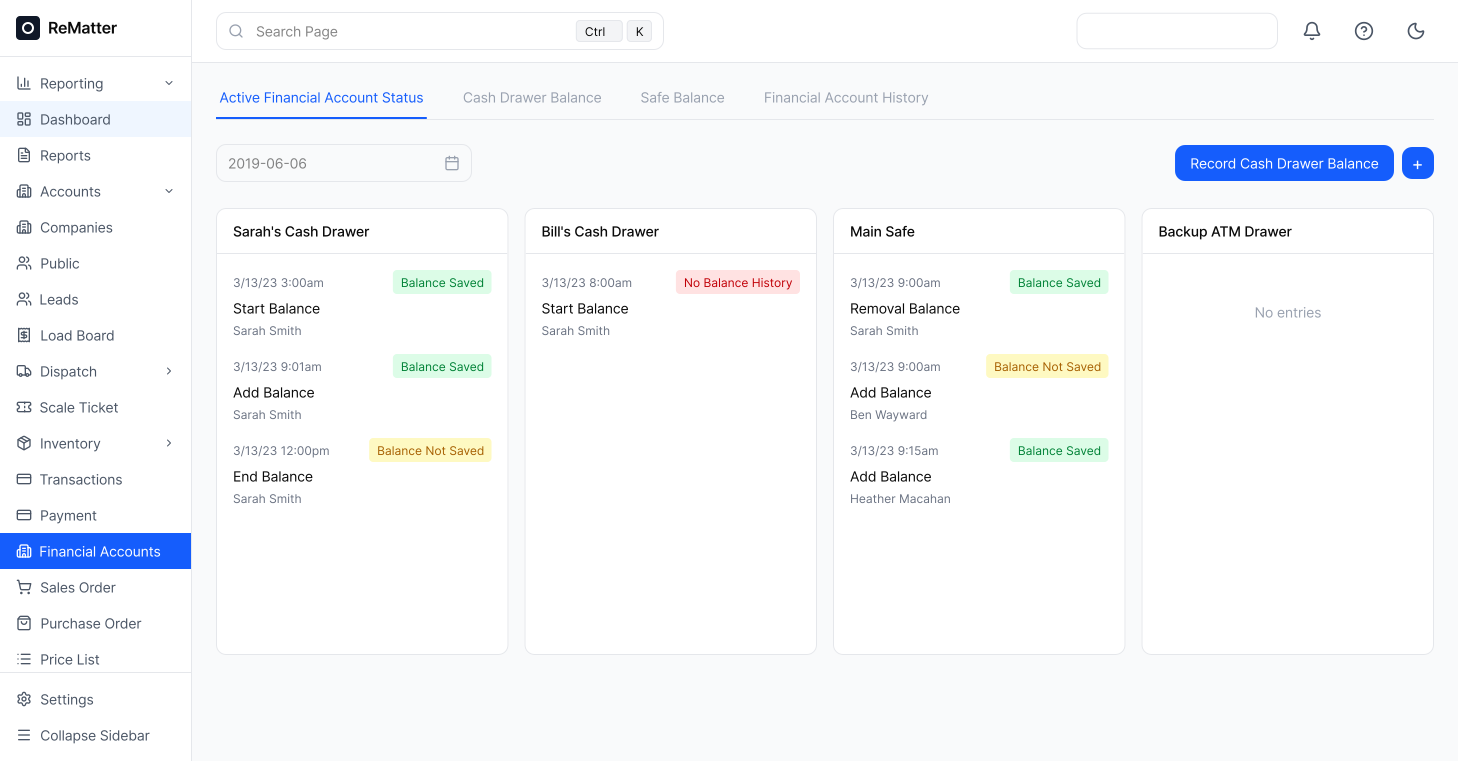
Cash Drawer Management
Real-time reconciliation
THE PROBLEM
Some scrapyards handle $100K+ in weekly cash transactions. Manual drawer reconciliation at shift end took 30+ minutes and discrepancies were difficult to trace, creating internal theft risk.
PRODUCT GOAL
Create a comprehensive cash management platform that handles operational counting, accounting reconciliation, and strategic forecasting—solving for speed, compliance, and accountability.
IMPACT
Real-time cash position visibility
Shift reconciliation in under 2 minutes
Instant variance detection and alerts
Complete audit trail for investigations
2 Min
RECONCILIATION TIME
-75%
SHRINKAGE REDUCTION
Real-time
DISCREPANCY DETECTION
PROBLEM & IMPACT
The Core Problem
Two personas with conflicting priorities: Scale operators needed speed (200 transactions/day), while back-office accounting needed compliance, accurate month-end close, and state-mandated DR6 reporting. Hidden problem: informal cash usage (lunch money, petty cash, personal loans) meant drawer balance never matched transactions.
User Pain Points
Scale operators: Manual reconciliation took 20-30 minutes, miscounts blocked end-of-day processing
Back-office: No audit trail for cash movements, month-end reconciliation nightmare of paper logs
Yard managers: Constant interruptions asking "How much cash do we have?", zero visibility into usage patterns
BUSINESS IMPACT
Inaccurate cash totals cascaded into compliance issues (DR6 forms require precise reporting)
Yards running out of cash mid-shift (operational crisis) or over-stocking (security risk)
No forecasting capability—managers guessed cash ordering needs
Internal theft concerns with zero transparency or pattern detection
KEY DESIGN DECISIONS
High-to-low denomination ordering
TRADEOFF
Match muscle memory and existing paper count sheets. 9/10 external interviews confirmed this pattern.
RATIONALE
Internal pushback: "Design it logically, not based on what others do." Had to fight for speed over "correctness" with external validation data.
Count by quantity of bills (not dollar totals)
TRADEOFF
Bank teller insight: "If I count totals ($100, $120, $140), I lose track when interrupted. But counting bills (18, 19, 20) I can pause and restart. Plus you can SEE if you miscounted a stack."
RATIONALE
Reduced mental math errors by 40% in user testing. Saved 3-5 seconds per count = 10-15 min daily.
Automatic audit trail (logged-in user + timestamp)
TRADEOFF
Eliminate manual signatures while creating stronger accountability. Match what banks do—teller ID automatically logged.
RATIONALE
Considered digital signature pads but would add 15-20 seconds per count. Speed won.
Three-tiered system: Operational, Accounting, Strategic
TRADEOFF
Cash reconciliation without cash management solves half the problem. Managers kept asking "How much cash do I need to order?" during testing.
RATIONALE
3 extra weeks development time (5 weeks vs 2 weeks). Prevented the next operational fire and created differentiator.
Configurable variance tolerance ($5, $10, $20)
TRADEOFF
$5 miscount at small yard is normal. At high-volume facility processing $100K/week, it suggests breakdown.
RATIONALE
Escalation thresholds: >$20 always requires manager review. Historical tracking flags consistent discrepancies.
Borrowed UI pattern from Load Board
TRADEOFF
Reused status card component from logistics dispatch. Familiar interface, saved ~1 week dev time.
RATIONALE
Users already understood visual language (color coding, status badges). Made it scalable for future inventory tracking.
Digital Payment Integration
Modern payment rails
THE PROBLEM
Rising  check fraud, desired limited cash handling, atm jamming concerns, and customer preference for digital payments required integration with digital payments.  No existing scrapyard system offered modern payment methods for peddlers.
THE SOLUTION
Integrated multiple digital payment processors with unified interface, automatic fee calculation, instant payout options, and compliance with state-mandated hold periods for high-risk transactions.
IMPACT
Reduced cash handling liability
Instant payouts for verified customers
Customer acquisition
Lower operational costs vs. check printing
45%
DIGITAL ADOPTION
Instant
PAYOUT SPEED
-30%
CASH VOLUME